Disclaimer

The content of each post is solely written by that contributor and only expresses the contributor's personal views. Each post does not represent the views of all the contributors or Women of Color Living Abroad as an organization. Each contributor is speaking from their own person experiences and/or perspective.
Showing posts with label Georgia. Show all posts

Thursday, June 14, 2012

~Inglisuri Maswavlebeli...Teaching in Georgia

Being an Inglisuri Maswavlebeli (English teacher) is indeed an interesting experience. I work as a co-teacher with local English teachers teaching 1st - 6th grade. My main responsibility as a co-teacher is to assist with improving listening and speaking skills among students as well as teachers. There is no English classroom, so we go to each class. I work about 20 hours a week with 45-minute classes; teachers do not exceed 30 hours.

Memorization is a popular style of learning in Georgia that I believe dates back to the Soviet times. In my opinion, this is not an effective teaching style because the children are still unable to comprehend the text. Over the past few months, I've tried to introduce my co-teachers to other techniques that are likely more beneficial for the students such as reading comprehension, composition, class presentations, songs and games. It's great that my co-teachers are open to my comments and activities; however, my awkward class schedule doesn't allow me to be consistent at all.

My co-teachers and I do not do any lesson planning, which is a problem that I attempted to change without any success. If I intend to teach a lesson, I show them my lesson plan beforehand and try to explain how it helps me. Simply giving a verbal explanation of the lesson without providing any written information or examples is not helpful, yet students are expected to understand right away. In my lessons, I do the complete opposite to make sure students understand and explain to my co-teachers my reason for teaching in such a way. At the end of the day, all I can do is my best and hope that some things that I have shared will help them to broaden their teaching styles.

The students are very friendly and super excited to see me to say Hello and Goodbye. I must get those two words a thousand times a day on the way to school, in class, walking the halls, and returning home. Classroom management is not a problem, and my students are well-behaved for the most part. Of course there are times when they get a little noisy but kids will be kids. The only thing I have had to work on is children raising their hands and waiting until acknowledged to answer questions, which they have caught on to quickly since I don't acknowledge those calling to me or not raising their hands. I try to engage the entire class in lessons whereas my co-teachers usually pay more attention to the top students; they have gotten better at this.

As expected, some of my classes are ahead of others, and there is a wide distribution of their level of skills. Once the lessons are interactive and fun, they are attentive and participate. Homework given is mostly memorization and translation of text versus actual assignments. However, most students usually don't do homework anyway or copy from their classmates. There is no disciplinary action for cheating or sharing answers that I am aware of. I sometimes give simple assignments, rewarding those that complete them correctly with smiley faces/stars, and doing homework reviews where students are asked to explain their answer choices.

Although my school doesn't look the best in terms of infrastructure, I have found that there is a good supply of resources available. Some teacher's textbook guides are available, blackboards are usable, chalk is available, and there is a computer lab with working computers and Internet access most of the time. My school director also provided some English books from the school library that I could use in class. Overall, the school staff and administration are hospitable and supportive.

Monday, May 14, 2012

Being of color in Georgia

It is important to do research and network with others that have or currently live in the country that you are considering moving to especially as a woman of color. Speaking with past and present teachers that are of color, as well as, the intercultural training that my program provides about the reactions of Georgians to people of color was quite helpful. Georgians don't see people of color often, so here are some things I've experienced living here.

Curious stares: Most of the locals are curious about seeing people of color for the first time in their lives, so everywhere from my village to the town and even the capital city I have experienced this. For the most part, people simply stare and/or slow down as I pass while others (especially children) may smile and say hello. The staring can be a bit much sometimes, but I usually don't pay attention to it. I think in any place where locals see an unfamiliar person they will be inquisitive; on the other hand, Georgians do seem to be the most obvious with their gawking. To say the truth, it's as if no one learns that it is rude to stare at someone. Sometimes I'd stare straight at them to give them a taste of their own medicine and they would look away quickly. Since I've become quite oblivious to the stares, my friends that are not of color are more bothered by it than I am.
Pics and more pics: Everyone wants to take pictures with me from children to adults to even my colleagues at school. I've even had the pleasure of being in a few bridal party pictures while visiting a few historical monasteries around the country. I don't really mind so I just smile for the camera for the most part. 
Invitations: In my village, neighbors are always stopping by my host family's house to greet me. Neighbors and teachers invite me to their homes often especially for Georgian dinner parties known as 'supras.' The funniest thing is that some people in my village continue to look at me as if they have not seen me a day in their lives and I've been here for 3 months.
21 Questions: People always want to know if I like the village, Georgia and the culture. They also ask about my nationality, age, family, profession and even marital status (always trying to marry me off to a nice Georgian guy). Questions galore!!! 
Although people of color get many stares, Georgians are always hospitable and happy to have us as guests. I have visited with a few Georgian families including co-teachers and friends and they are always been ecstatic to have me as their guest.
It is quite interesting how much they like Rap/Hip hop especially Tu-Pac! They also love Whitney Houston. By the way, some teachers of color got condolences and bereavement days off from school when Whitney Houston died! 
Many teachers of color have some interesting stories about living in Georgia, but we simply take it as a part of the experience and not let it bother us.

Friday, April 20, 2012

Village life in Georgia...the country not state!

This is an account of some things that I have experienced living in a small village while teaching English abroad in the Republic of Georgia (an Eastern European country near Armenia and Turkey). My placement is in West Georgia in the Guria region which is situated near the Black Sea and known for its warm climate. My other group mates that arrived with me were so jealous, and they said it was unfair to put someone from a warm climate in a warm region. This hadn't been the case during my first few weeks here (locals say it was the longest winter in many years)!

Nasakirali is a quaint little community surrounded by evergreen bushy forests and a view of the Bakhmaro Mountains. There is only a school, clinic, and lots of little shops. Most the people do their own farming so there are lots of cows, pigs, and hens roaming the streets. I was shocked to learn that there is a large Muslim community here, but their practices are quite different from what you would think of. There is no Mosque, praying, and women covered up showing only their eyes. Some of the locals even drink wine, so this is definitely a Georgian version of the religion.

My village

Now to my village life experience:
◊ My host family consists of just an elderly couple that teach at my school. This is very small and different since generations of family members usually live in one household in Georgia. They don't speak any English, but are very loving and have truly embraced me as a part of the family. I call my host mother 'deda' and my host father 'mama' which are Georgian words for mother and father. I wish I had started learning more Georgian before my arrival, but since I am surrounded by Georgian I'm picking it up along the way.

◊ I live in a nice two-storey home, which is common in villages compared to cities where people usually live in apartments. Although my room is currently in the library with a double pull-out couch, now that we are in Spring I'll be in moving upstairs to my own private suite with a picturesque view of the village. I'm super excited! There is a wooden stove and no indoor heating, so this was a major adjustment during the cold these past few weeks. Many times I sat huddled by the stove to keep warm even with layers of clothing on so I am happy that Spring is finally here.

My home in the village

◊ My diet consists of mostly starchy foods including bread, potatoes, and cheese, but we eat beans, fish, and chicken as well. Meat is very expensive here. The good thing is that these are organic products since my host family has a garden of vegetables and cows. I do watch my portion sizes and started walking now that the weather has warmed up.

◊ Infrequent hot showers since pipes were frozen during the winter months. This having been a very long winter, I had to adjust to this. Two words WET WIPES!

◊ Neighbors frequently visit my home, and I am invited to their homes often either for 'suphras' (dinner parties) or to simply show me their homes and introduce me to family members. They love to give guests coffee and chocolates. I'm not a fan of coffee but I drink it to be polite.

My 1st suphra!

◊ I usually walk wherever I need to go in the village, which is mainly to and from school. My host parents and I take a short 12-minute trot there. It's great exercise so I don't complain. It was a bit of pain during the cold and snowy days (sometimes we would catch a ride with a passerby) but the Spring weather makes it much better!

◊ To get in and out of the village, I have to take a marshutka (mini-buses that are very popular throughout Georgia). This is a 30-minute ride to the nearest town and I travel either by train or marshutka to my final destination. If I'm running errands or meeting up with other friends in town I walk. I'm still adjusting to this because the bus schedules are very limited so I have to be sure to get to the station on time or I will be stuck in town until the next day. I could take a taxi but they are very expensive and not being a local can mean additional costs. On weekends that I travel outside of my region, I'm usually able to stay at one of the school teacher's house.

 
The Marshutka

◊ After school and on weekends in the village, I mainly read and watch movies on my laptop. Otherwise, I sit and watch tv with my host parents especially Spanish soap operas, Georgian Dancing with the Stars and Georgian Idol (their version of popular American shows), visit with neighbors, and take long naps.

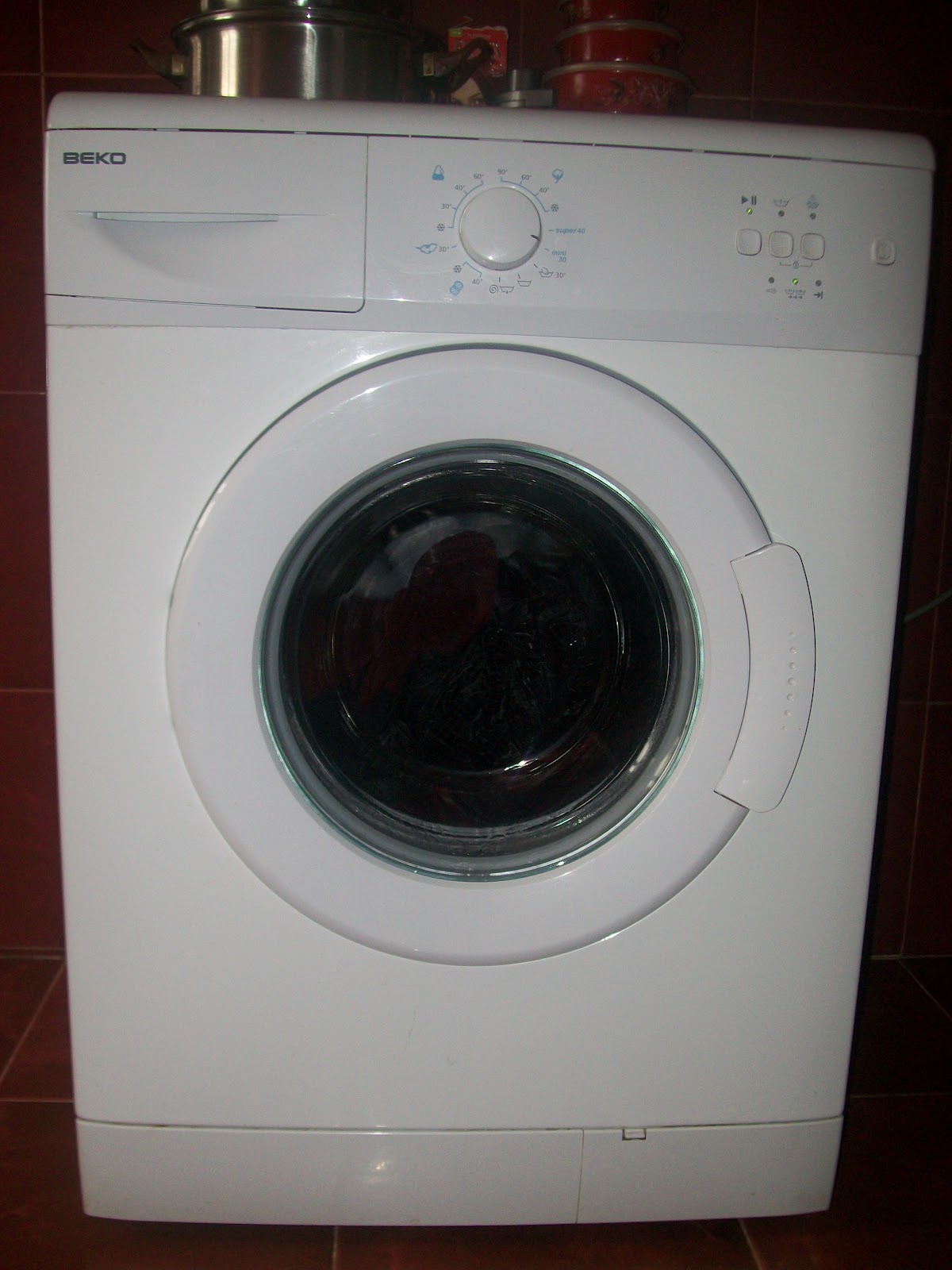
◊ Washing machines here have the modern look but do not work as such. I'd prefer to do laundry weekly, but these machines it takes hours to wash a load of clothes. The first time I did laundry I took a two hour nap and my clothes still were not done so I'm just thankful that my host family has a washing machine. There are no dryers and clothes are hung on the line (even in cold weather), but there's nothing like air drying clothes.

The washing machine

◊ There is no internet access at my house, so I had to go to the nearest town to purchase a USB modem and internet package. Although it's the best internet service is quite and most likely to work in villages, the USB modem is quite expensive and I pay monthly by GB.

◊ Curious stares and pictures are common for people of color so my village is no different, but being here over a month now everyone is getting use to seeing me. The people are friendly and always bid me hello 'Garmajoba.'

It can be boring living such a laid back lifestyle especially with no English speakers around, but I'm making the best of it. Now that I am picking up the language and making friends with neighbors in my age group it's not too bad. Also, I have been traveling around the country on most weekends now that the weather is warming up. It's great to be in a place I don't have to worry about locking doors at night or crime and everyone knows each other. Also, I can always meet up with other English teachers in town or call them for free on my local cellphone as well as travel to other regions on weekends. I'm enjoying the experience of living here so far, and I hope to learn to milk a cow, make homemade dairy products, and plant and harvest vegetables!